Did you know that the strongest substance created by the human body is tooth enamel? It’s even stronger than bone!
If you have questions that dive deeper than choosing the right toothbrush, this blog post is custom suited for you. Today, the Miracle Dental team in northwest Las Vegas answers questions about human teeth, like “What are teeth made of?” We believe that the better your understanding of oral health and its components, the more equipped you’ll be to care for your teeth, gums, and mouth. Knowledge is power.
If you’re looking for a dentist who prioritizes patient education and clear communication, call us for a consultation today. Drs. Pham and Tran welcome new patients of all ages, and we offer a diverse range of services to accommodate most dental and periodontal issues, as well as modern technology, a competent and compassionate team, and various patient comfort measures. Give us a call at (702) 456-0056.
Teeth Are Not Bones
Though tooth enamel resembles bone, your teeth are not 32 little bones. A broken bone, properly set, will re-attach and heal. Teeth do not heal or regenerate. You see, our teeth don’t have the same type of blood supply as bone, so they lack the ability to naturally heal. Because of this key difference, oral health care and disease prevention are important to maintaining good oral health and comfortable function.
The 4 Main Parts of a Human Tooth
Enamel
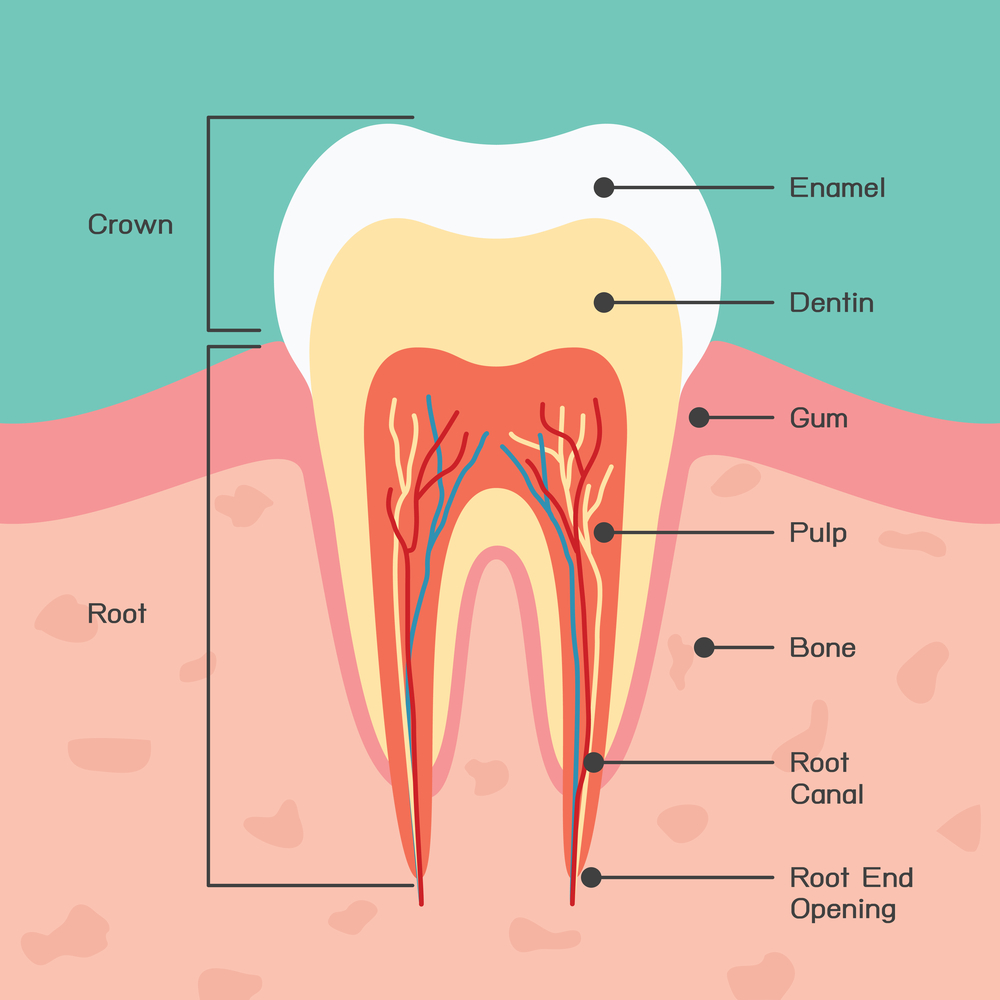
Did you know that tooth enamel is about 96% mineral? Calcium and phosphorus strengthen enamel, but the arrangement of the minerals in tightly packed rods, or prisms, made of hydroxyapatite crystals, makes enamel stronger than bone.
Demineralization is the first step in cavity formation. When you eat foods containing sugars or any form of starch, oral bacteria produce acids that temporarily soften tooth enamel for about 20–60 minutes. During this time, enamel is more vulnerable to erosion and cavity formation. If lost minerals are not replaced by saliva or topical fluoride, the weakened area can progress into a cavity.
Tooth enamel shields underlying layers from chewing forces, acids, and bacteria. Enamel is the “armor” our teeth wear for protection. Strong, well-mineralized enamel better insulates and safeguards the dentin and pulp beneath. When enamel becomes thin or weakened, tooth sensitivity increases—and once enamel is damaged or eroded, it cannot grow back.
Dentin
Just below enamel, a layer of soft, sensitive tissue called dentin makes up most of a tooth’s structure. Dentin contains tubules that funnel outer sensations to the nerve, housed within the tooth’s inner chamber, in the pulp. This means dentin is actually responsible for teeth feeling sensitive to temperatures and pressures.
Pulp
Inside the protected chamber within each human tooth, a combination of tissues makes up the tooth’s pulp. These tissues include nerves, blood vessels, connective tissue, and specialized cells called odontoblasts, which are essential for tooth development and repair. Dental pulp extends from the chamber down through the root canals, helping keep the tooth alive.
Pulp can become damaged or infected when oral bacteria enter the tooth through a deep cavity, crack, or abscess. Treating infected pulp typically requires root canal therapy, the most effective way to remove infection and save the tooth from extraction.
Cementum
While enamel coats the crown—the visible portion of the tooth—the roots have no enamel. Instead, tooth roots are covered with cementum, a specialized tissue that helps anchor the tooth within the jawbone. Working together with the periodontal ligaments, cementum stabilizes and secures teeth in their sockets.
Tooth Truths
- Did you know tooth pain often begins before any visible damage occurs?
Thin enamel, exposed dentin, and early demineralization can cause tooth sensitivity or discomfort even before a cavity forms. Some dental issues, such as abscesses, may not be visible during an exam and are often detected only with dental X-rays.
- Did you know tooth enamel erosion can occur without cavities?
Enamel erosion is the gradual thinning of tooth enamel caused by repeated exposure to acids. Frequently consuming acidic beverages like sodas, wine, and citrus juices can wear down enamel over time. Using a straw may help limit acid contact, but reducing consumption and choosing water remains the most effective way to protect enamel.
Tooth Structure Matters for Your Oral Health
With preventive dental visits, daily oral home care, a healthy diet, and a few precautions, you may stave off enamel erosion, dental sensitivity, and other toothache causes. At Miracle Dental, we will gladly share knowledge with you, from answering “What are teeth made of” to exploring your X-rays on a chairside monitor together, you and our dentists can establish a solid plan for long-term oral health, comfortable function, and optimal beauty.
Call Miracle Dental in northwest Las Vegas now at (702) 456-0056 for your appointment.